

This review is sponsored by type.ai. Our opinions are our own.
If you write romance novels, most AI tools force you into the wrong shape. Chat windows forget your cast. Generators spit out a spicy short and leave you nowhere to put chapter twelve. Type.ai sells a different pitch: a document-first editor built for long manuscripts, with Chat and Notes wrapped around a draft that can grow to about 150,000 words.
For this Type.ai review, I spent time inside Type.ai with one goal: see if it can carry a romance novel from first scene to finished draft. Below you’ll find what it does well, what it costs in 2026, how it handled an enemies-to-lovers scene, and where it pulls back on heat.
Type.ai Review: Quick Verdict
Type.ai is strongest as a manuscript workspace. You draft in a real document, Chat proposes edits as green tracked changes you accept or reject, and Notes can hold the story bible so the AI stays oriented on characters and plot. It is not a one-click spicy story machine. If you want full novels shaped inside one editor, it is worth a serious look. If you only want quick heat scenes with zero guardrails, other tools still fit better.
What Type.ai Is
Type.ai is an AI-first writing editor aimed at books, novels, screenplays, and long stories. The core layout is three panes:
Notes on the left for characters, settings, scenes, and story memory
Document in the center for the manuscript
Chat on the right for brainstorming, drafting, feedback, and rewrites
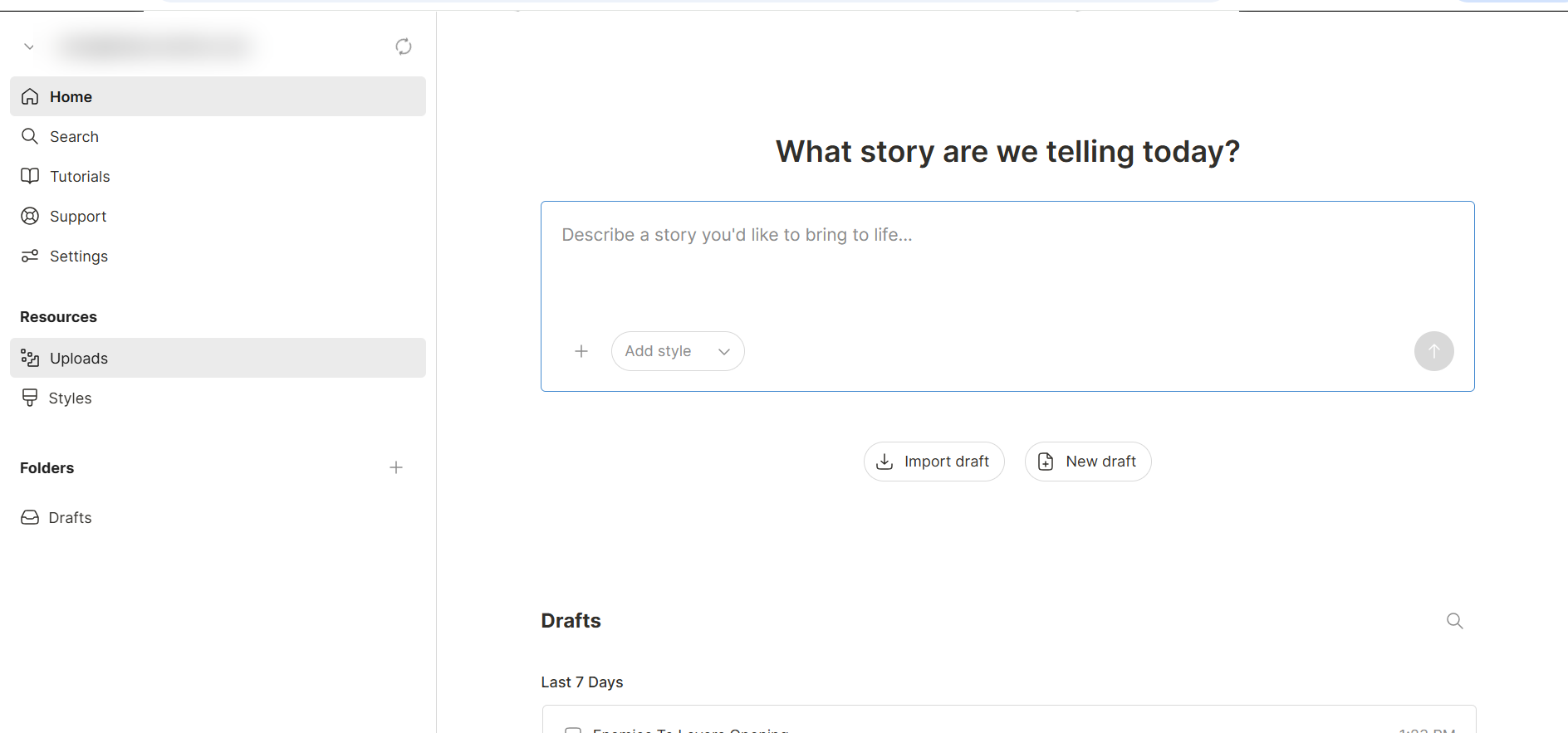
On the home screen the product asks, “What story are we telling today?” You get a prompt box, an Add style dropdown, Import draft and New draft buttons, a Drafts list, and a sidebar with Search, Tutorials, Support, Settings, Uploads, Styles, and Folders.
That home screen already tells you the audience: writers who keep projects, styles, and folders, not people hunting a five-minute flirt bot.
Features That Matter for Romance Novels
Document Plus Chat, Not Chat Alone
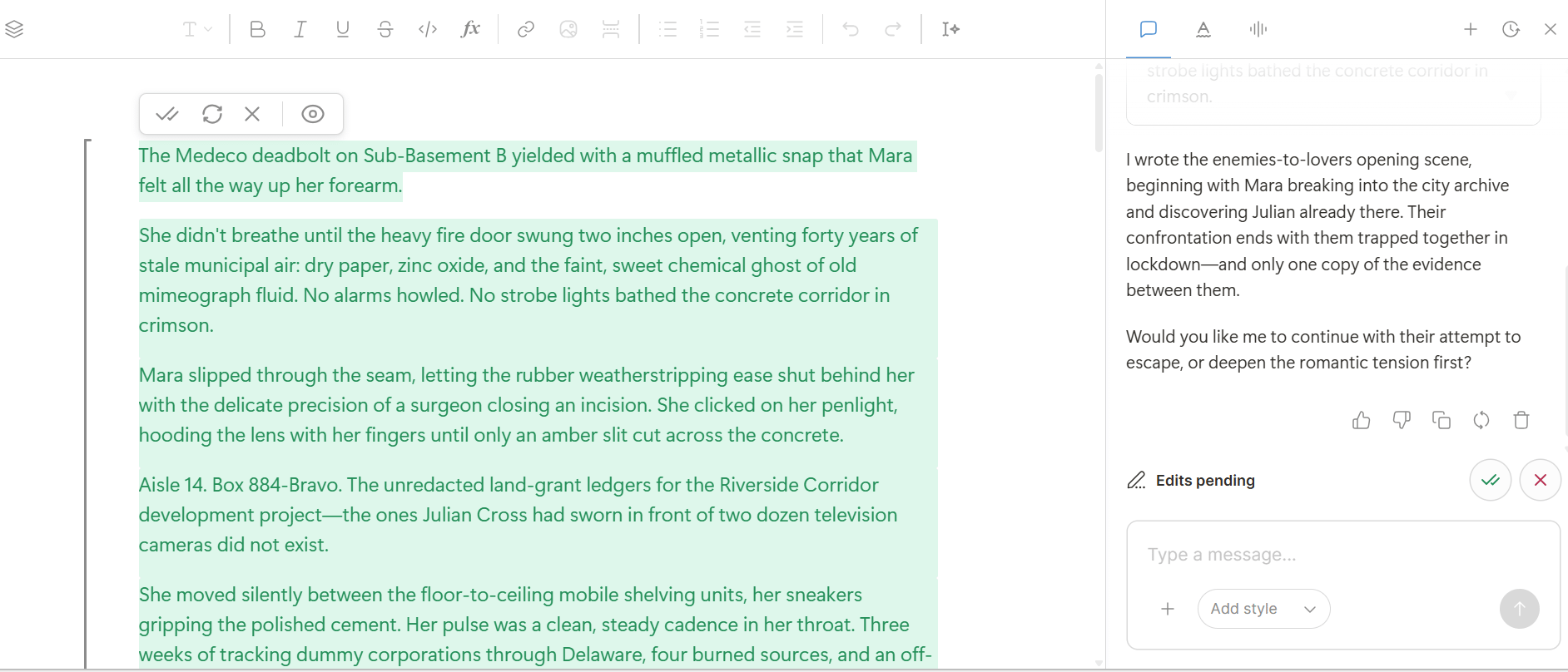
The biggest difference from plain ChatGPT or Claude is that Chat writes into the manuscript. When I asked for an enemies-to-lovers opening scene, Type.ai dropped a long, polished scene straight into the document. New text showed as green tracked edits with accept, reject, and regenerate controls, plus an Edits pending bar. Nothing hit the draft until I reviewed it.
That workflow matters for romance. You can keep Mara’s sarcasm and Julian’s smirk in the same file as chapter five instead of copy-pasting from a chat log that will forget both names next week.
Notes as a Story Bible
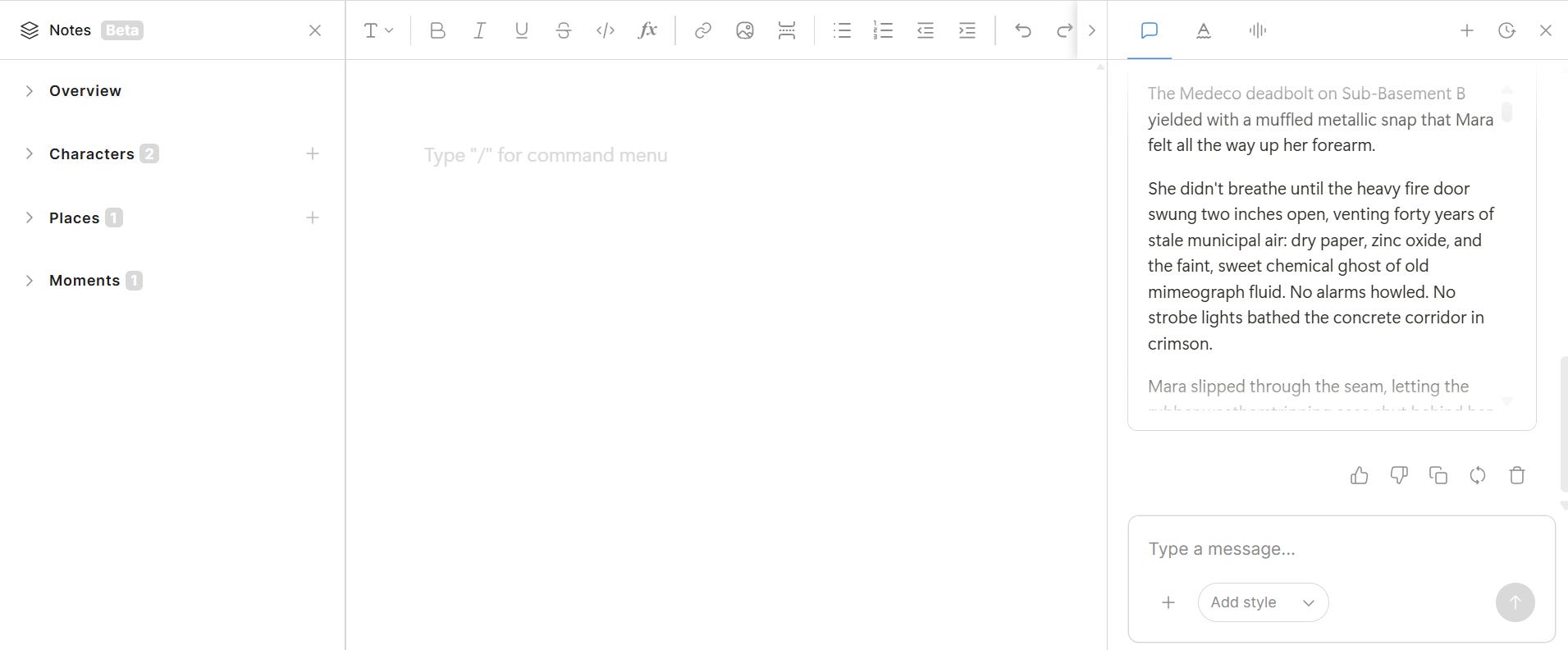
Notes sit beside the draft so character sheets, locations, and scene lists live with the manuscript. The product markets AI memory that updates from chat, with room for manual edits. For multi-book romance series or tangled love triangles, that beats hoping a chat thread still remembers who kissed whom in book one.
In our test, Notes (still marked Beta) had already sorted the scene into Overview, Characters, Places and Moments, with Characters showing 2 entries, and Places and Moments showing 1 each, without us typing anything into it.
Styles, Import, Export
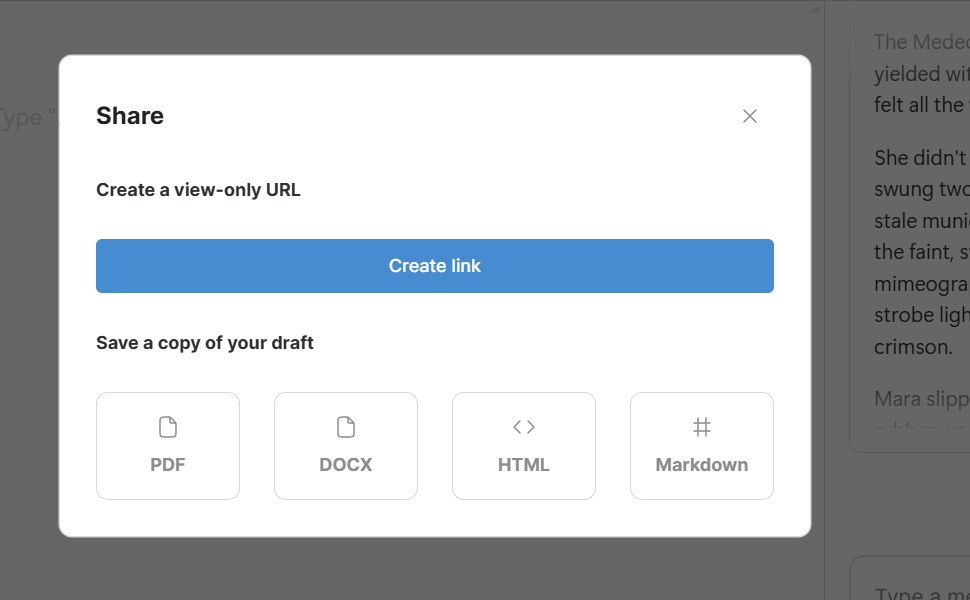
Custom writing styles let you push the AI toward a voice. Import covers DOCX, PDF, images, and URLs for drafts up to the same roughly 150k-word document ceiling. Export options include PDF, DOCX, HTML, and Markdown, plus view-only share links and AI narration if you want to hear a chapter read aloud. Offline editing works for the document itself; AI features need a connection. All of this sits in one Share window: a Create link button for a view-only URL, plus one-click PDF, DOCX, HTML and Markdown downloads.
Inline Edits
Highlight a line, rewrite it, continue a paragraph, or run a custom brush. Edits stay reviewable. For romance, that is useful when the banter is almost right but the last line needs sharper teeth.
The Hands-On Romance Test
I asked Chat for an enemies-to-lovers opening scene. It delivered a full scene in one pass: investigative journalist Mara Vale breaks into a city archive at night and finds rival crisis manager Julian Cross already there. Sharp banter, a scuffle over a ledger, charged proximity. Sample of the tone:
“You’re late,” a voice said from the shadow between bays two and three. “And your tension wrench is scratching the brass on the outside cylinder. A proper locksmith would weep.”
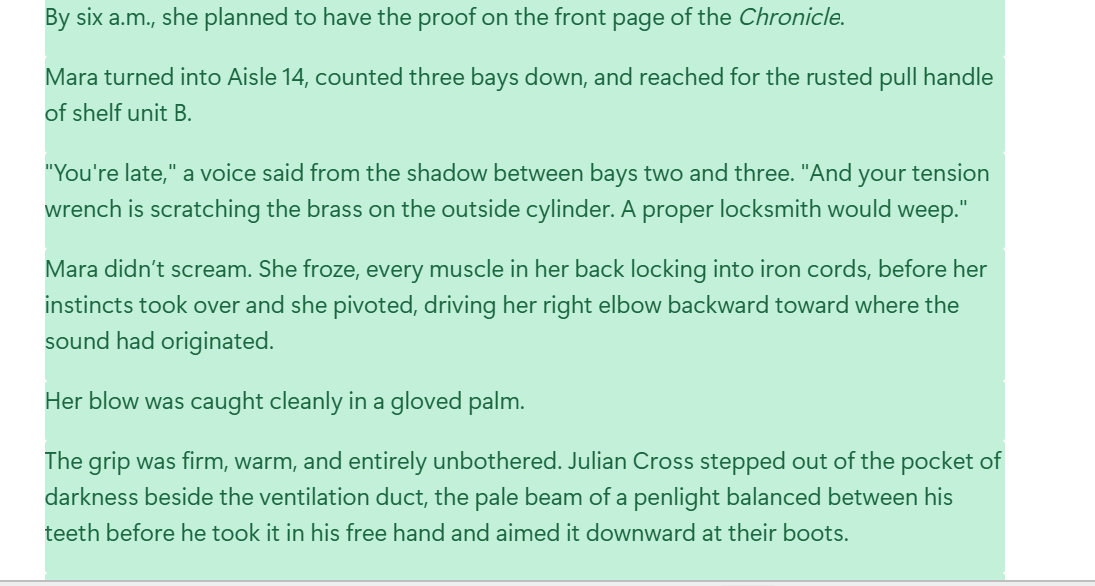
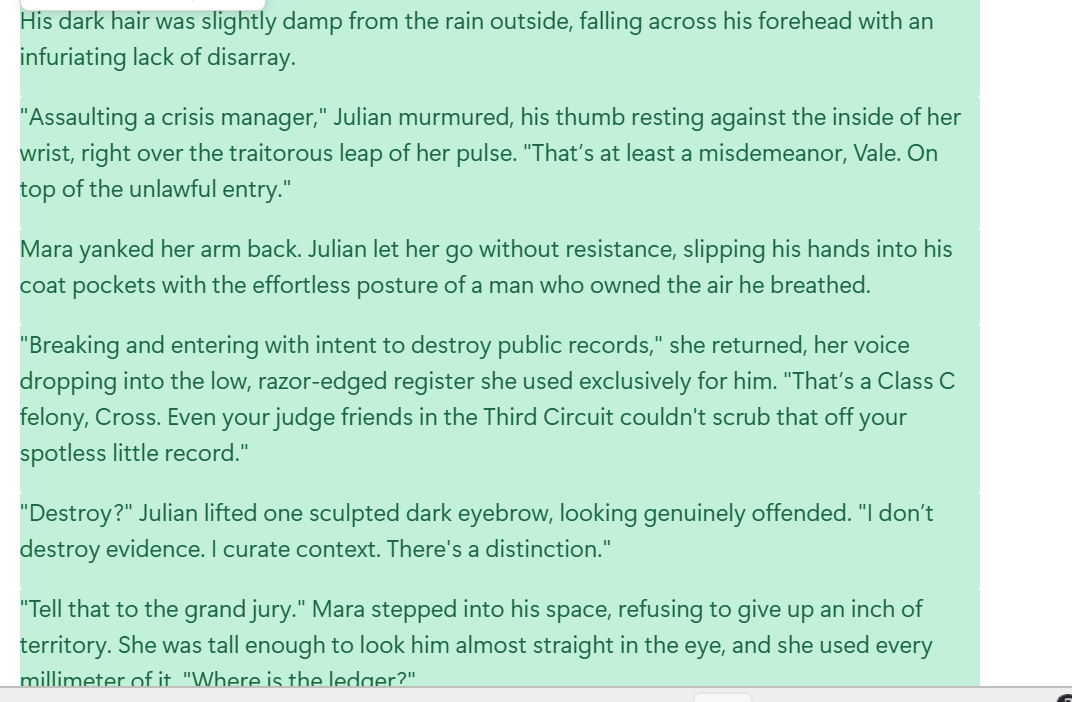
The prose was dense and literary rather than template-flirty. After the draft landed, Chat asked whether to continue the escape or deepen the romantic tension — a useful fork instead of dumping endless text.
Then I asked it to make the scene steamier. It did not refuse. Sensual tension and physical contact went up: charged banter, bodies pressed together, clear hints of arousal. It stopped short of a fully explicit sex scene in that pass, so I did not push further into graphic erotica in this test.
What That Means for Heat Levels
For closed-door, steamy, or sensual romance openings, the tool cooperated in this session. For fully explicit smut, this short test does not prove reliability. Type.ai’s Terms also bar content that is “vulgar” or “obscene,” which leaves consensual adult erotica in a gray zone. Model providers can still refuse prompts even when the editor itself is willing. Romance writers who need open-door heat should run their own ceiling test on a paid plan before building a whole manuscript around it.
Type.ai Review: Pricing in 2026
Public pricing at the time of writing:
Free: $0, a one-time credit pool that does not reset
Basic: $12/month, or $8/month billed annually ($96/year), 500,000 credits a month
Pro: $24/month, or $16/month billed annually ($192/year), 1,500,000 credits a month
Max: $96/month, or $64/month billed annually ($768/year), 6,000,000 credits a month
Credits power AI chat, generation, and related features. Manual writing, organizing, import, export, and sharing do not burn credits. Paid monthly credits reset on renewal with no rollover; extra credit packs on paid plans do not expire. First paid subscription carries a 30-day money-back window. Cancel from Settings → Billing.
Treat public tiers as the buyer reference; partner or promo access can look different inside Settings.
Credit burn is the practical risk. Long Chat sessions on a 25k-word draft can chew through a monthly pool fast. If you draft whole chapters through Chat every day, Pro or Max is more realistic than Basic. If you mostly write yourself and use AI for scene sparks and rewrites, Basic may be enough.
Privacy and Data
Type.ai states it does not train AI models on user data, and that the third-party model providers it uses also do not train on that data. Drafts stay private unless you create a view-only share link. Prompts and documents still go to AI partners (OpenAI and Anthropic, with Google models also advertised on paid plans) so the models can generate and edit. That is normal for any frontier-model wrapper, but it matters if you are drafting unpublished manuscripts with personal or client material. Export backups yourself; Type.ai is not a long-term archive after account closure. The service is 18+.
Type.ai Vs Other Romance AI Tools
Vs ChatGPT / Claude: Same class of models, weaker novel architecture in the chat apps. Type.ai wins on manuscript + Notes + accept/reject edits in one place.
Vs Sudowrite: Sudowrite stays fiction-generation first (Story Bible, Muse, Expand). Type.ai feels more like an editor that happens to have strong AI. Many romance novelists will still prefer Sudowrite for pure generation; Type.ai for living inside the draft.
Vs NovelCrafter: NovelCrafter leans planning and bring-your-own-key. Type.ai leans integrated draft + chat with less planner ceremony.
Vs spicy short-story tools: Different job. Type.ai will not replace a smut generator built for one-shot heat.
Pros
Real manuscript editor with roughly 150k words per document
Chat edits land as tracked green changes you can accept, reject, or regenerate
Notes story bible sits beside the draft
Custom styles, folders, import, and multiple export formats
Strong enemies-to-lovers scene quality in the Chat test, including raised steam without an immediate refusal
Company claim of no training on user data
Free tier exists; annual plans cut the monthly price
Cons
Credits can burn quickly on heavy Chat drafting
Terms language on “vulgar” / “obscene” content leaves explicit erotica unclear
Fully explicit open-door smut was not confirmed in this test
Single UI font (Inter); polish the look after export
No native iOS/Android app yet — mobile web only
Not built as a one-click spicy story generator
Who Type.ai Is For
Buy it if you are drafting long romance manuscripts, want ChatGPT-class help inside a real document, care about Notes/continuity, and prefer accept/reject control over silent rewrites.
Skip it if you only want fast explicit shorts, you need a tool with a clear NSFW green light, or you refuse to watch credit meters.
Romance novelists drafting full books sit in the first camp. Quick-spicy-story seekers sit in the second.
FAQ
Is Type.ai Good for Romance Novels?
Short answer from this Type.ai review: Yes for structure and long-form drafting. The enemies-to-lovers test produced sharp banter and usable steam. Explicit open-door work still needs your own heat test against the Terms and model filters.
How Much Does Type.ai Cost?
Free, then Basic at $12/month ($8 annual), Pro at $24 ($16 annual), and Max at $96 ($64 annual), with credit pools that scale by plan.
Does Type.ai Train on My Manuscript?
Type.ai says no — it does not train on user data, and claims its AI providers follow the same rule for that traffic. Content is still sent to those providers to generate replies.
Type.ai Vs Sudowrite for Romance?
Sudowrite for generation-heavy fiction workflows. Type.ai for manuscript-first editing with Chat and Notes attached. Many writers can justify both for different stages.
Can Type.ai Handle Spicy Romance?
In this test, a steamy request raised sensual tension and physical intimacy without a refusal, but it did not produce a fully explicit sex scene. Official Terms still flag vulgar/obscene content, so treat heat as “test before you commit.”
Type.ai Review Final Verdict
Type.ai earns a place on the Romance Nerds shortlist for writers who think in manuscripts, not chat threads. The document-first design, tracked Chat edits, and Notes bible are the real product. Pricing is clear once you map credits to how hard you lean on AI. The open question for this audience is heat policy: sensual romance worked in our pass; full explicit erotica remains unproven here and sits under fuzzy Terms language.
If you are mid-novel and tired of pasting scenes out of a chatbot, start on Free or Basic, run your own spicy ceiling test, and decide from the credit meter — not the homepage screenshots. For a broader map of romance-focused AI tools, pair this Type.ai review with our guide to the best AI romance story generators and pick the stack that matches your heat level and drafting style.